
Identifying Wind Lift & Hail Damage on Older Newark Roofs
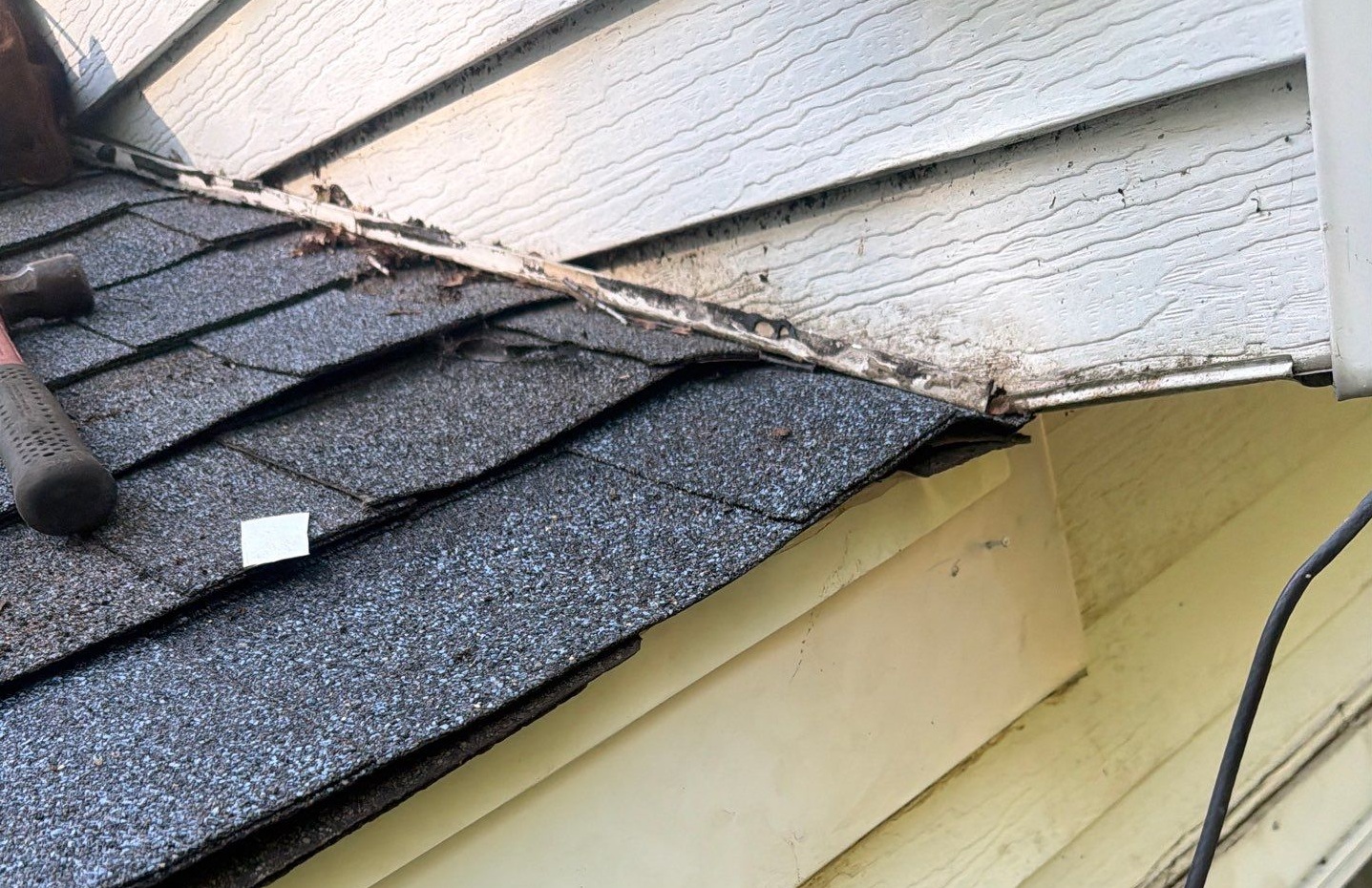
A Helpful post-storm guide for homeowners in New Castle County
When severe weather rolls through New Castle County, our homes take the brunt of it. Between late-summer thunderstorms, sudden hail bursts, and coastal nor’easters, Newark roofs undergo a serious beating year after year.
If your home is in established Newark neighborhoods like Pike Creek, Hockessin, Chapel Hill, or right along the Kirkwood Highway corridor, there is a good chance your roof has been keeping your family dry for 15, 20, or even 25 years. While asphalt shingles are built tough, older shingles gradually lose their flexibility. When high winds and hail hit an aging roof, the resulting damage isn’t always as obvious as a fallen tree branch or a giant gaping hole.
At Paddy’s, we’ve been an established roofing contractor in Newark for over two decades. Most of our team grew up right here in northern Delaware, and we’ve inspected thousands of storm-damaged roofs across the area. We decided to use our extensive experience to put together this step-by-step guide on how to spot wind lift and hail damage on older shingles before a small leak turns into an expensive interior headache.
What Is “Wind Lift” and Why Is It Dangerous for Older Roofs?
When strong storm winds sweep over your house, they create an aerodynamic uplift, similar to how air moves over an airplane wing. On a brand-new roof, shingles are sealed tight with fresh adhesive strips. But as shingles age, heat, rain, and winter freezes break down that adhesive seal.
When winds gust over 40–50 mph, they can lift loosened shingle tabs up. This is known as wind lift.
Signs of Wind Damage to Look For From the Ground
(Safety First: You never need to climb onto your roof to perform an initial storm check! Grab a pair of binoculars and walk your yard.)
- Creased or Folded Shingles: When wind lifts a shingle tab upward, it creates a thin horizontal crease line across the top of the shingle. Even if the shingle lays back down flat after the storm, that crease permanently weakens the fiberglass mat underneath.
- Missing Shingle Tabs: If the wind is strong enough, it snaps the creased shingle right off, exposing the dark asphalt underlayment or nail heads below.
- Lifted Flashing Around Chimneys & Skylights: High winds can pry loose metal flashings around brick chimneys, skylights, and side walls, leaving direct channels for rainwater to drip down into your attic.
- Shingle Granules in Your Gutters: Check your downspout splash blocks. If you see piles of dark, sand-like granules, your shingles are losing their protective outer coating due to wind friction and aging.
Ready for a Roofing Upgrade?
Get a Professional Roof Estimate at No Cost
How to Spot Hail Damage on Older Shingles
Hail in Newark might only last a few minutes, but hit an aging roof with marble-sized ice pellets, and the structural impact can be severe. Hail doesn’t usually poke holes straight through a roof; instead, it causes impact bruising.
When a hailstone strikes an older, brittle shingle, it compresses the asphalt layer and knocks off the protective surface granules.
What Hail Damage Actually Looks Like:
- Dark, Spongy Bruises: On asphalt shingles, hail strikes look like small, dark, round indentations. If you press gently on the mark (or if a professional inspects it), it feels soft and spongy compared to the solid shingle around it.
- Exposed Black Asphalt: When granules are knocked away by hail, the raw black asphalt underneath is exposed to UV sunlight. Over the next few weeks, sun exposure bakes that exposed asphalt, causing it to crack and leak.
- Dented Metal Vent Caps & Gutters: Hail doesn’t hit shingles in a vacuum. If you see small dings or pockmarks on your metal gutters, downspouts, roof ridge vents, or aluminum siding, your roof almost certainly took a direct hit as well.
Why Older Newark Homes Are at Greater Risk
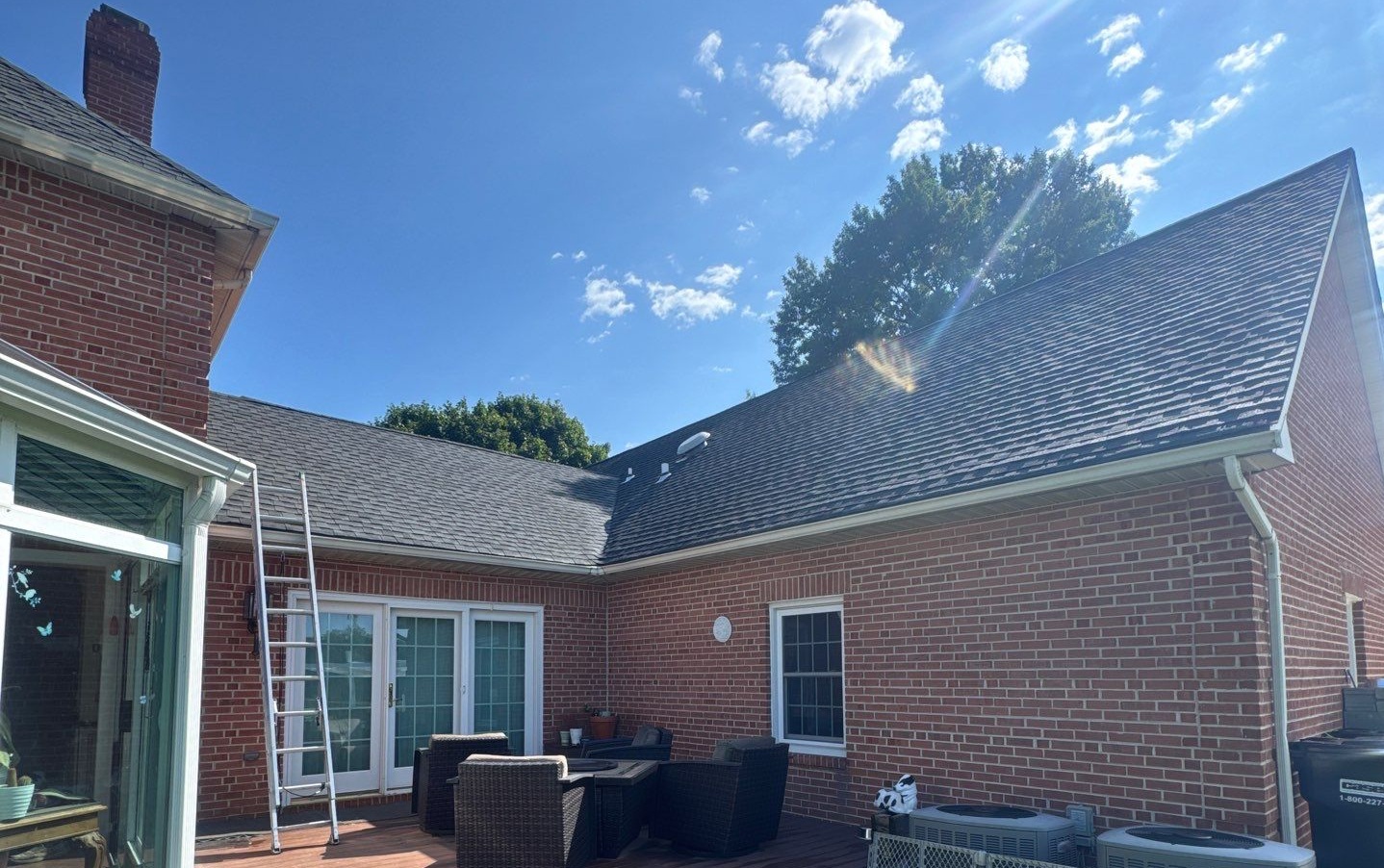
Roofing materials have evolved significantly over the last two decades. Many homes built in New Castle County during the 1990s and early 2000s were constructed using older 3-tab asphalt shingles. Compared to modern architectural shingles (like modern GAF Timberline HDZ systems), older 3-tab shingles have a much lower wind resistance rating, often maxing out around 60 mph.
Add 15+ years of Delaware humidity, summer heat, and winter freeze-thaw cycles, and the sealant strips under those shingles naturally degrade. That’s why older roofs often show severe storm damage after a windstorm, while a newer roof down the street comes through untouched.
What to Do After a Storm: A 4-Step Action Plan
If a major storm just swept through your neighborhood, here is the stress-free way to handle your exterior:
1. Perform a Ground-Level Walkaround
Walk around the perimeter of your house. Take photos with your phone of any missing shingles, fallen debris, dented gutters, or displaced chimney flashing.
2. Check Your Attic & Top-Floor Ceilings
Head up to your attic with a flashlight. Look for damp insulation, dark water stains on the underside of the roof decking, or moisture trailing down drywall ceiling joints in upstairs bedrooms or closets.
3. Contact a Local, Licensed Roofing Contractor
Avoid “storm chasers”, out-of-state contractors who drive into town after a heavy storm, knock on doors offering “free roofs,” and disappear three weeks later when warranty issues pop up. Choose an established contractor based right here in town.
Our primary Delaware headquarters is located right on Kirkwood Highway in Newark, and we have a second local office down in Middletown on Summit Bridge Road. Working with a local company ensures you receive local manufacturer warranties, proper New Castle County permits, and a team that stands behind their work for decades.
4. Schedule a Professional Roof Inspection
A trained roofer can safely walk your roof, document crease lines, check chimney flashings, verify hail impact counts per square, and provide you with an honest condition report. If the damage is covered by homeowner’s insurance, your contractor can provide clear photo documentation for your adjuster.
Protect Your Home with Paddy’s
Whether your roof just needs a few creased shingles repaired or it’s time to explore a complete, storm-resistant roof replacement, our local family-owned team is here to help. We take pride in educating our neighbors, giving you clear options, and doing the job right the first time.
Need a post-storm roof check?
Call our Newark team directly at (302) 388-3625 or visit our main office at 2702 Kirkwood Highway, Newark, DE 19711. You can also stop by our Middletown office at 5207 Summit Bridge Road or request a free estimate online today!

Patrick F.
Patrick F. is the owner of Paddy’s Roofing, Siding, and Chimneys and a roofing professional with more than 30 years of industry experience. He has owned and operated Paddy’s since 2013 and has been a GAF Master Elite® contractor for several years. Patrick brings extensive hands-on roofing knowledge and a commitment to honest, quality workmanship to every project.
More About Patrick F.