
Commercial Exterior Maintenance for Delaware Business Parks
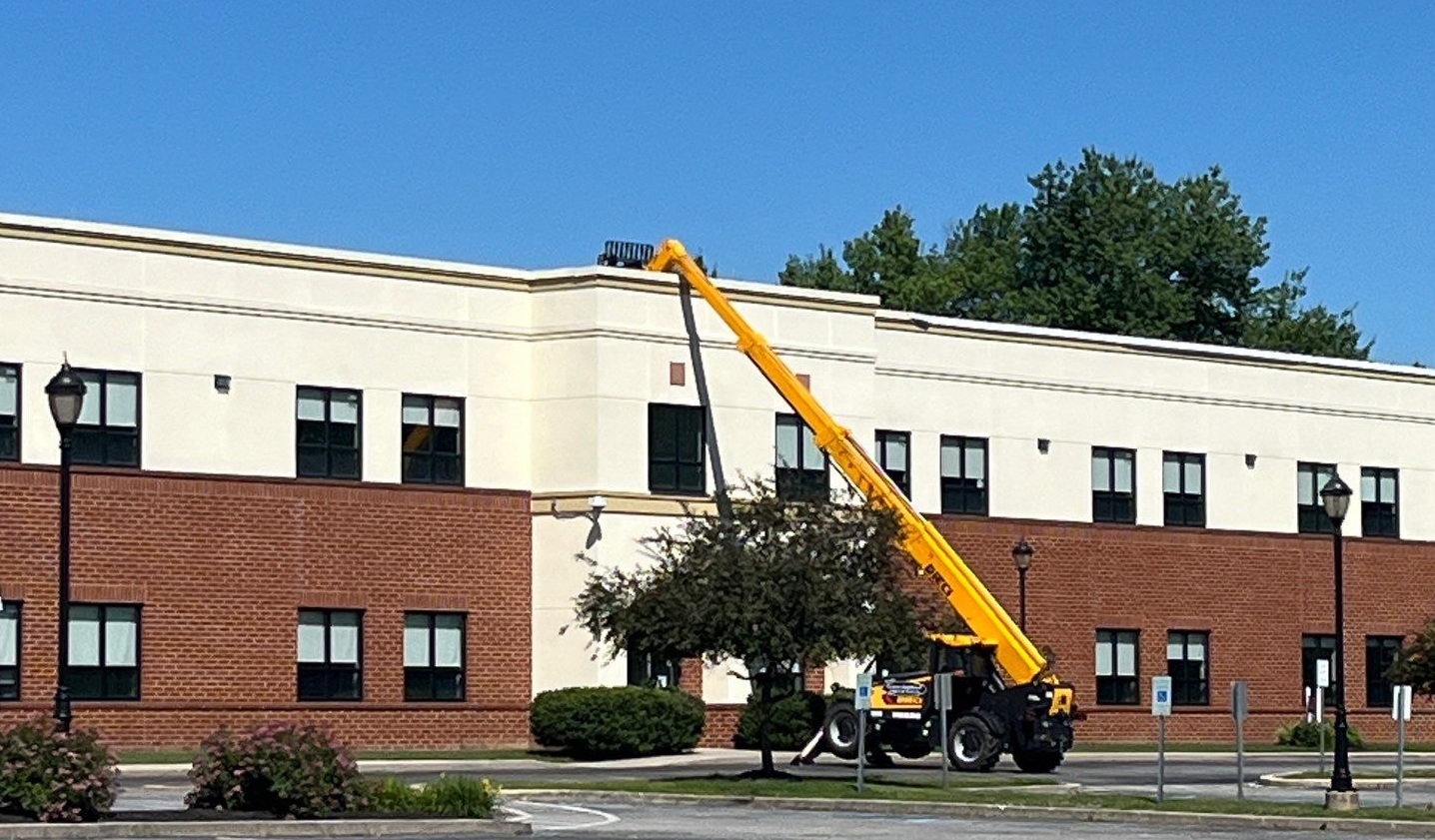
A maintenance guide for commercial properties; From wall panels, to siding & roof drainage
Maintaining a commercial property across New Castle County comes with a unique set of challenges. Whether you manage a professional office complex off Kirkwood Highway, a light industrial facility in Ogletown, or a corporate business park along the Route 279 corridor, your building’s exterior is constantly working. It protects your tenants or staff, secures valuable inventory, and establishes that critical first impression for clients driving up to your property.
When late summer transitions into autumn, weather patterns across northern Delaware shift quickly. Sudden heavy downpours, strong winds, and winter freeze-thaw cycles can wreak havoc on commercial building envelopes. While roof membranes often get primary attention, wall panels, commercial siding, trim, and roof drainage systems are equally vital to keeping your building watertight and structurally sound.
At Paddy’s, we’ve partnered with commercial property managers and HOA boards throughout Newark, Wilmington, and Middletown for over two decades. As a local, family-owned commercial roofing contractor headquartered right here in Newark, we understand the local building codes, weather demands, and commercial maintenance schedules needed to protect your investment.
Here is our practical, field-tested guide to commercial exterior maintenance for Delaware business parks this season.
1. Commercial Wall Panels & Metal Siding Maintenance
Commercial exterior cladding, whether insulated metal wall panels, commercial vinyl, fiber cement, or architectural metal siding, acts as your building’s primary shield against wind-driven rain and humidity. Over time, building expansion, structural settling, and weather exposure weaken seams and joint sealants.
Critical Wall & Siding Areas to Inspect:
- Control Joints and Perimeter Caulking: Commercial wall systems rely heavily on elastomeric sealants around windows, doors, and panel-to-panel expansion joints. In Delaware’s humid climate, sun exposure bakes these sealants, causing them to crack, shrink, or pull away. Cracks as small as 1/16th of an inch can allow driven rain to penetrate wall cavities, leading to interior mold and drywall damage.
- Loose or Rusted Fasteners: Metal panel systems use specialized gasketed screws. Temperature fluctuations cause metal panels to expand and contract. Over time, these fasteners can back out or the rubber washers can dry-rot, creating direct pathways for water intrusion.
- Panel Cleats and Trim Integrity: Inspect corner trims, drip edges, and base flashings. Physical impacts from landscaping equipment, delivery trucks, or maintenance carts often bend low-lying metal siding, breaking water barriers near the building’s foundation.
2. Roof Drainage Systems: Box Gutters, Scuppers & Downspouts
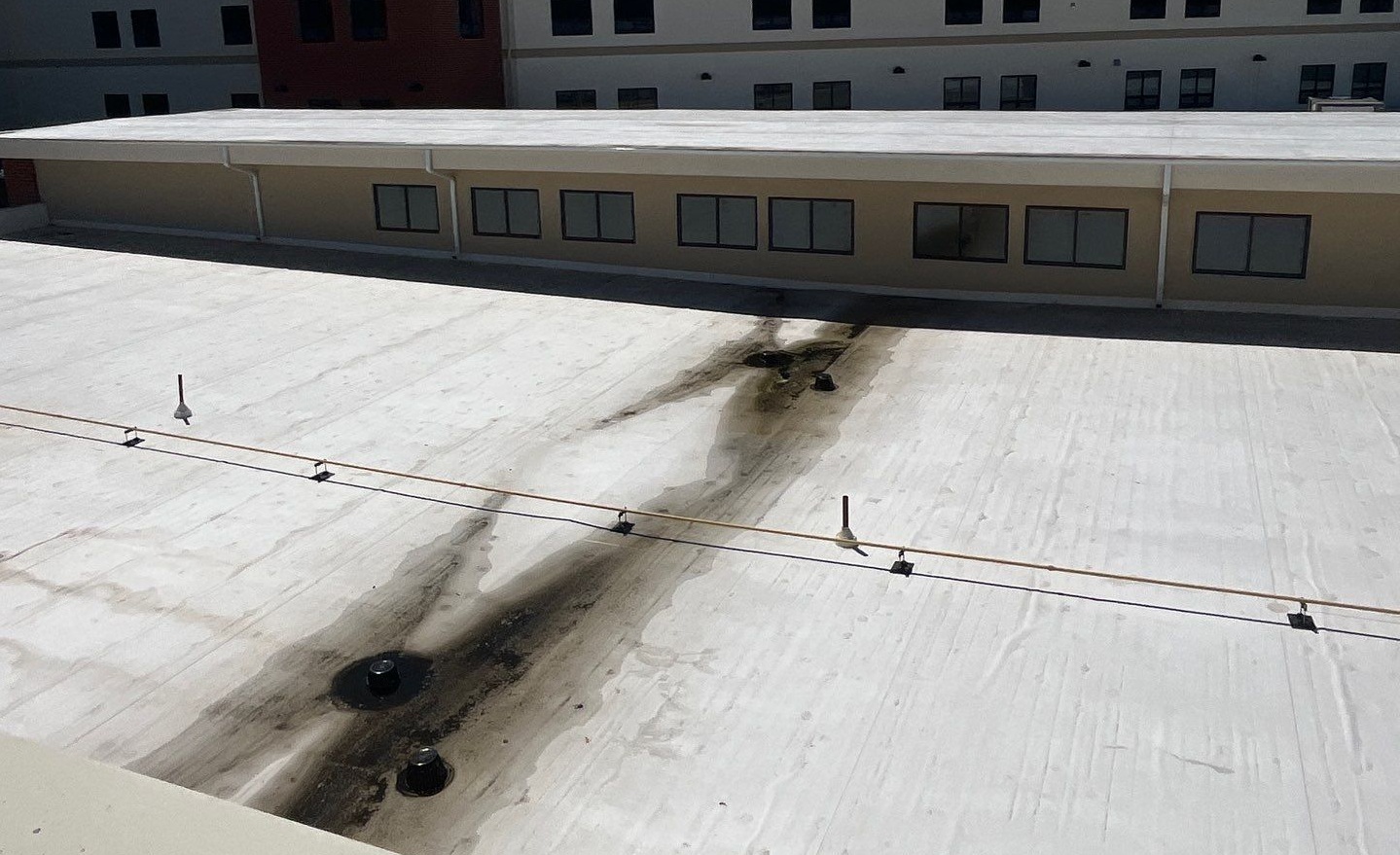
A commercial roof is only as good as its drainage capacity. When severe rainstorms hit New Castle County, flat and low-slope commercial roofs must shed thousands of gallons of water per hour. If drainage systems are clogged or damaged, water pools along roof edges and commercial wall transitions, putting immense weight stress on structural decking and forcing water behind siding systems.
Essential Roof Drainage Checks:
- Scuppers and Parapet Wall Flashing: Commercial buildings with parapet walls route water through metal wall openings called scuppers. Ensure these openings are completely free of leaves, wind-blown trash, and bird nests. Inspect the metal flashing around the scupper sleeve, cracks here allow water to run straight inside exterior wall cavities.
- Commercial Box Gutters and Downspout Straps: Unlike residential gutters, commercial box gutters handle massive water volume. Ensure seams are tight and coated with commercial sealant. Check downspout straps anchored to brick or siding, loose downspouts rattle in high winds and can pull away from the building, dumping water directly against foundation walls.
- Overflow Drains & Roof Drains: Ensure primary roof strainers are locked in place and overflow scuppers are clear. An obstructed primary drain forces water to rise until it reaches overflow scuppers; if those are blocked too, structural roof deflection or internal leaks are imminent.
Ready for a Roofing Upgrade?
Get a Professional Roof Estimate at No Cost
3. Protecting Wall-to-Roof Transitions
The intersection where a commercial roof meets an exterior wall (parapets, clearstory walls, and equipment screens) is historically the single most common leak location on commercial properties.
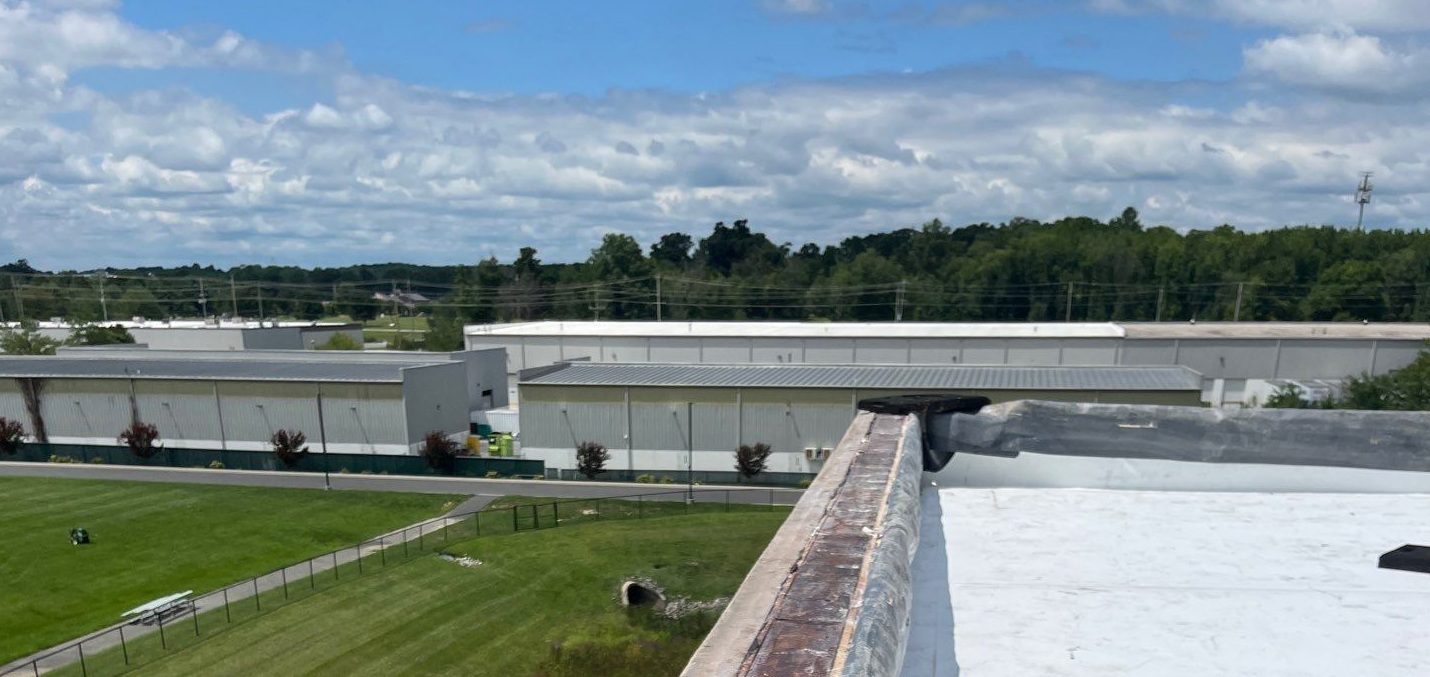
- Coping Cap Seams: The metal caps sitting atop parapet walls protect the masonry or siding below. High winds can loosen coping cap joints, breaking the water-tight seal.
- Counter-Flashing & Termination Bars: Verify that termination bars holding membrane or metal flashing against siding/brick are securely anchored and fully caulked along the top lip.
Why Partnering with a Local Commercial Contractor Matters
Managing commercial property maintenance requires rapid response times, clear documentation, and minimal disruption to your tenants. Working with an out-of-area contractor or relying on short-term labor often leads to generic fixes that fail to meet Delaware commercial building standards.
Paddy’s operates out of two permanent locations in New Castle County:
- Newark Headquarters: 2702 Kirkwood Highway, Newark, DE 19711 | (302) 388-3625
- Middletown Branch Office: 5207 Summit Bridge Road, Middletown, DE 19709
Because our commercial exterior team lives and works locally, we provide prompt, ongoing maintenance services, comprehensive multi-building inspections, and long-term warranty support tailored to Delaware facilities.
Schedule Your Delaware Business Park Exterior Audit
Don’t wait for a heavy autumnal rainstorm or winter freeze to expose hidden siding cracks or blocked commercial gutters. Preventative exterior maintenance preserves property values, protects interior assets, and saves thousands of dollars in emergency repair costs.
Ready to inspect or upgrade your commercial building envelope?
Call our commercial roofing team at (302) 388-3625 to schedule a comprehensive exterior audit for your business park today!

Patrick F.
Patrick F. is the owner of Paddy’s Roofing, Siding, and Chimneys and a roofing professional with more than 30 years of industry experience. He has owned and operated Paddy’s since 2013 and has been a GAF Master Elite® contractor for several years. Patrick brings extensive hands-on roofing knowledge and a commitment to honest, quality workmanship to every project.
More About Patrick F.