
Soffit & Fascia Repair: The Hidden Safeguard Against Attic Pests and Mold
When homeowners think about protecting their roofs, they usually focus on shingles, flashing, gutters, and leaks. There are two other parts of the roofing system that deserve just as much attention though: the soffit and fascia.
These components may not be as noticeable as your roof itself, but they play an important role in protecting your home from moisture, insects, rodents, and other problems. Damaged soffit and fascia can create openings that allow pests into your attic and let moisture enter areas where it can contribute to mold and wood deterioration.
At Paddy’s Roofing, we’ve worked on homes throughout Newark, Middletown, and New Castle County and we’ve seen firsthand how a relatively small soffit or fascia problem can turn into a much bigger home repair. The good news is that catching these issues early is usually much easier and less expensive than dealing with the damage they can eventually cause.
What Are Soffit and Fascia?
Before discussing why these components are important, it helps to understand what they actually do.
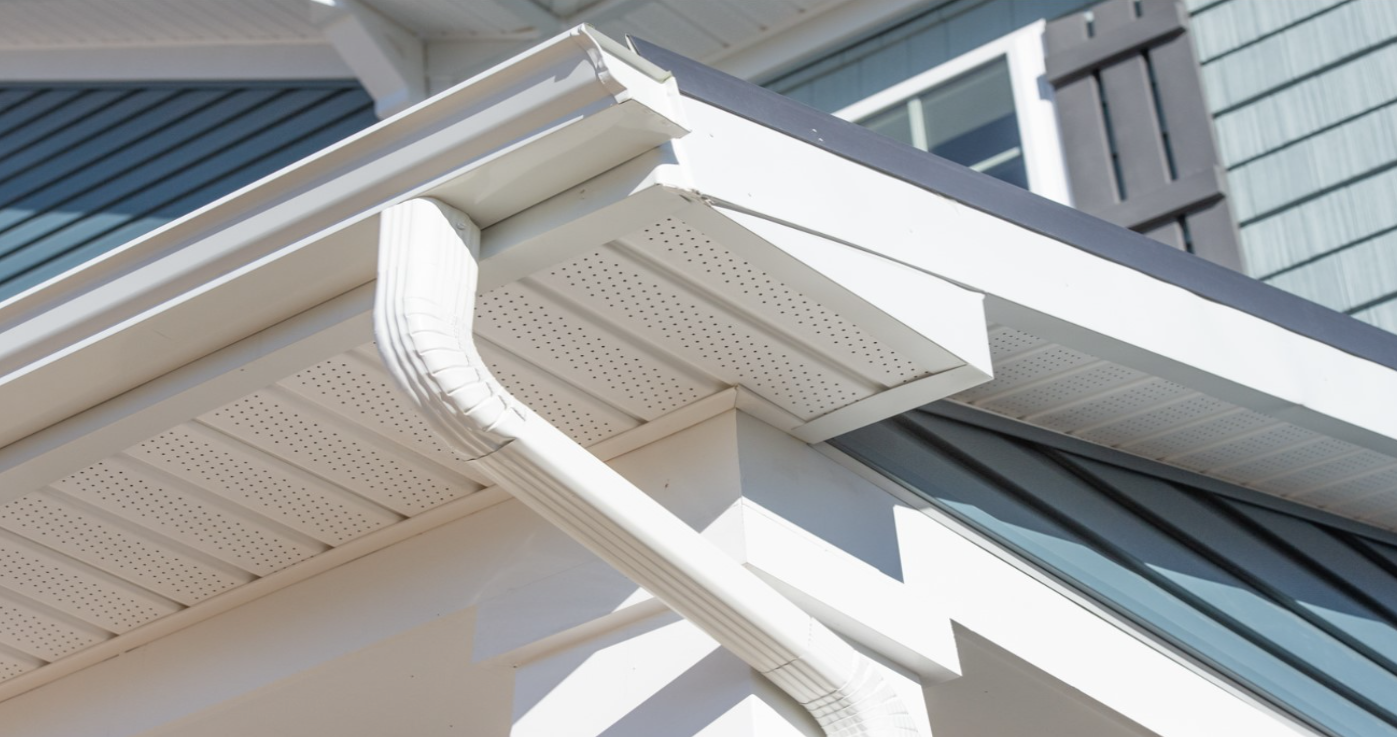
Soffit is the material installed underneath the overhanging portion of your roof. If you stand next to your house and look upward at the underside of the roof’s overhang, you’re looking at the soffit.
Soffit often includes ventilation openings that allow fresh air to circulate through the attic. Proper attic ventilation helps regulate temperature and moisture levels, making the soffit an important part of your home’s overall roofing system.
Fascia is the vertical board or covering that runs along the lower edge of the roof, typically where the gutters are attached. It provides a finished appearance while helping protect the underlying roof structure from weather exposure.
Although they serve different purposes, soffit and fascia work together to protect the edge of your roof and help maintain a healthy attic environment.
How Damaged Soffit Can Invite Attic Pests
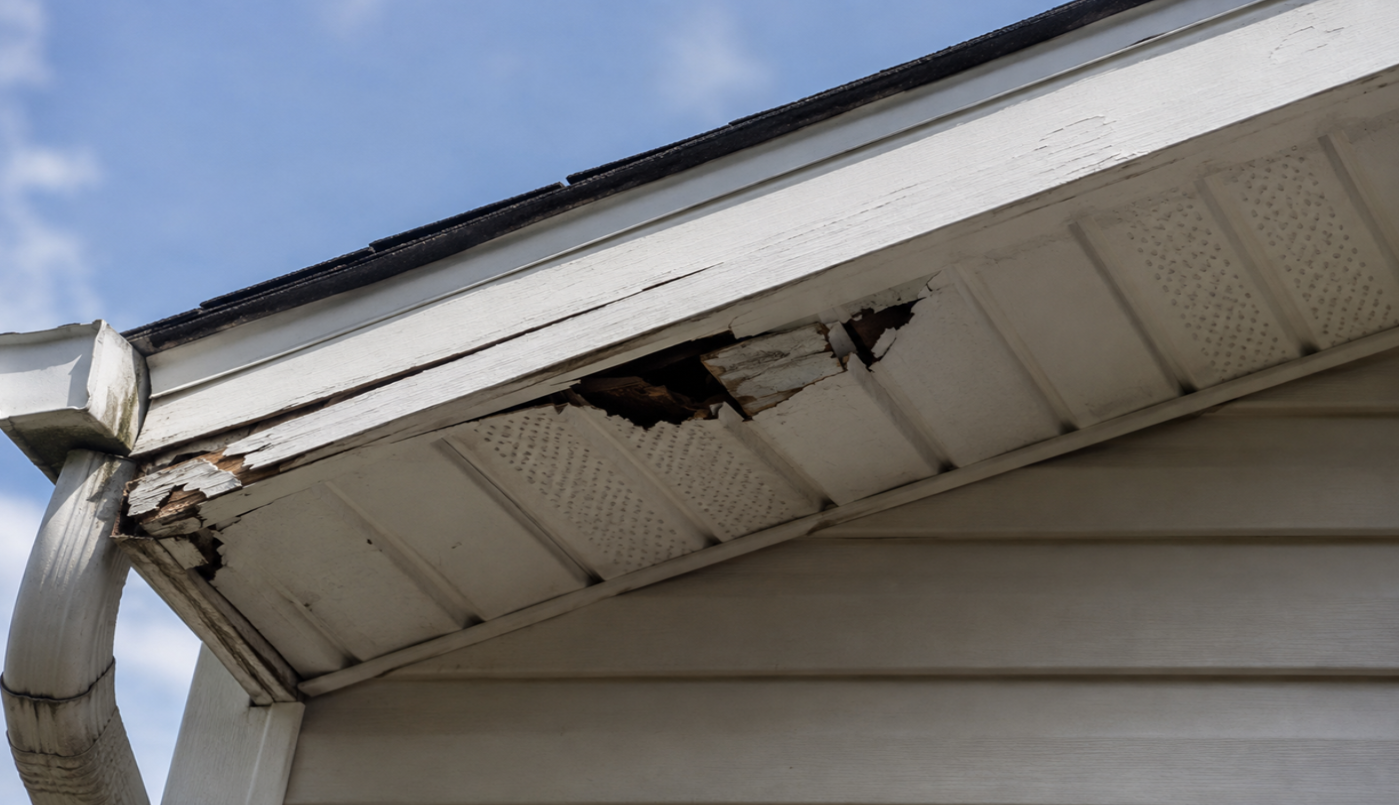
One of the biggest problems we see with damaged soffit is that it can create an easy entry point for unwanted visitors.
Small animals don’t need a very large opening to get inside your attic. Birds, squirrels, bats, mice, and other pests can take advantage of gaps, cracks, holes, or loose soffit panels.
Once inside, these animals can cause a surprising amount of damage. They may tear up insulation, chew on wood, damage wiring, build nests, and leave behind droppings and other debris.
Insects can also take advantage of damaged areas around your roofline. Carpenter bees, wasps, and other insects may find openings around deteriorating wood or gaps in the soffit and fascia.
A homeowner may not realize there’s a problem until they begin hearing scratching or movement in the attic. By that point, the original soffit damage may have been present for months.
Ready for a Roofing Upgrade?
Get a Professional Roof Estimate at No Cost
Why Fascia Damage Can Lead to Bigger Problems
Your fascia is particularly important because it sits along the roof’s edge and often supports your home’s gutter system.
When fascia becomes damaged or rotted, the problem can extend beyond the board itself. Water can work its way behind the fascia and into the roof edge, soffit, or underlying wood structure.
This is especially concerning when gutters are attached directly to deteriorating fascia. If the wood can no longer securely support the gutter system, gutters may begin to pull away from the house or drain improperly.
That can result in water collecting near the foundation or running behind the gutter and into areas where it doesn’t belong.
In other words, a small section of rotted fascia isn’t necessarily just a cosmetic problem. It can be an early warning sign that moisture is affecting the roof edge.
The Connection Between Soffit, Ventilation, and Mold
One of the most important jobs your soffit can perform is helping ventilate the attic. A properly ventilated attic allows air to enter through soffit vents and move through the attic toward exhaust vents near the roof ridge or other high points. This circulation helps remove excess heat and moisture.
When soffit vents are damaged, blocked, or covered by debris, ventilation can become less effective. That’s a problem because moisture naturally enters your attic in several ways. Warm air from inside your home can rise into the attic, while temperature changes can cause condensation. Roofing leaks can introduce additional moisture. If that moisture doesn’t have a way to escape, humidity levels can rise.
Over time, excessive moisture can contribute to:
- Mold growth
- Mildew
- Wood rot
- Damaged insulation
- Deteriorating roof decking
- Poor indoor air quality
It’s important to point out that damaged soffit isn’t automatically going to cause mold. Mold requires the right combination of moisture, temperature, and an organic surface on which to grow. However, damaged or poorly functioning soffit ventilation can contribute to the moisture conditions that allow mold problems to develop.
Delaware Weather Can Be Hard on Soffit and Fascia
Homes throughout Newark and New Castle County experience a wide range of weather throughout the year.
Our summers can be hot and humid, while winters bring freezing temperatures, snow, ice, and repeated freeze-thaw cycles. We also get periods of heavy rain and strong winds. All of these conditions can gradually wear down exterior materials.
Moisture can penetrate cracks and deteriorated wood. Freezing temperatures can cause water trapped in small openings to expand. Strong winds can loosen panels or expose existing weaknesses. Over several years, these relatively small stresses can turn into visible deterioration. That’s one reason regular roof maintenance and inspections are so valuable. A professional can identify areas of concern before they become major problems.
Signs Your Soffit or Fascia May Need Repair
Homeowners can often spot signs of soffit and fascia damage from the ground. Take a look around the perimeter of your home and watch for:
Peeling or flaking paint: This can indicate that moisture is getting into the material.
Cracks or holes: Even a relatively small opening can give pests access to your attic.
Sagging or loose sections: Soffit panels should fit securely along the roofline. Loose sections may indicate damage underneath or problems with the installation.
Soft or rotting wood: If your fascia is made from wood, deterioration may become visible as the material ages.
Water stains: Discoloration around the soffit or fascia can be a sign of moisture intrusion.
Gutters pulling away from the house: Deteriorated fascia may no longer provide adequate support for the gutter system.
Pest activity: Scratching sounds, nesting materials, droppings, or visible insects around the roofline can indicate that something has found an entry point.
If you notice any of these signs, it’s worth having the area inspected.
Does Damaged Soffit or Fascia Mean You Need a New Roof?
Not necessarily.
This is an important point because homeowners sometimes assume that deteriorating soffit or fascia automatically means the entire roof needs to be replaced. In many cases, soffit and fascia repairs can be completed without replacing the roof.
The appropriate solution depends on the extent of the damage and what’s causing it. If the issue is limited to a few damaged panels, replacing those sections may be all that’s needed. If there is extensive moisture damage, rot, or an underlying roof leak, additional repairs may be necessary.
At Paddy’s, we believe homeowners deserve an honest assessment before making a major investment. Our job is to determine what’s actually wrong and explain your options clearly.
Repairing the Problem Early Can Save Money
It’s easy to put off soffit and fascia repairs because they aren’t usually an urgent problem when the damage first appears. That can be a mistake. The sooner these issues are identified, the more options you typically have for addressing them. Preventative maintenance isn’t always exciting, but it can save homeowners from dealing with much more expensive repairs later.
Should You Inspect Your Soffit and Fascia Every Year?
We recommend including soffit and fascia in your regular home exterior inspections. You don’t necessarily need a separate inspection every year just for these components. However, when your roof is inspected or you’re having other exterior work performed, it’s a good idea to have the roof edges, soffit, fascia, and gutters evaluated as part of the process.
It’s also smart to take a look after significant storms. High winds and heavy rain can expose or worsen existing weaknesses. If you live in an older home, have experienced recurring roof leaks, or have noticed signs of pests in the attic, a professional inspection becomes even more important.
Trust Paddy’s With Your Home’s Exterior
At Paddy’s, we understand that taking care of your home isn’t just about fixing the problem you can see. Sometimes the most important repairs are the ones that prevent problems you haven’t even noticed yet. Soffit and fascia are good examples.
Our team proudly serves homeowners throughout Newark, Middletown, and communities across New Castle County, Delaware. Whether you’ve noticed damaged soffit, deteriorating fascia, a gutter that’s pulling away from the house, or signs that pests may have gotten into your attic, we’re here to help determine what’s going on.
If you’re concerned about your soffit or fascia, contact Paddy’s to schedule an inspection and find out what your home needs to stay protected.

Patrick F.
Patrick F. is the owner of Paddy’s Roofing, Siding, and Chimneys and a roofing professional with more than 30 years of industry experience. He has owned and operated Paddy’s since 2013 and has been a GAF Master Elite® contractor for several years. Patrick brings extensive hands-on roofing knowledge and a commitment to honest, quality workmanship to every project.
More About Patrick F.