
TPO vs EPDM For Commercial Buildings – A Complete Guide
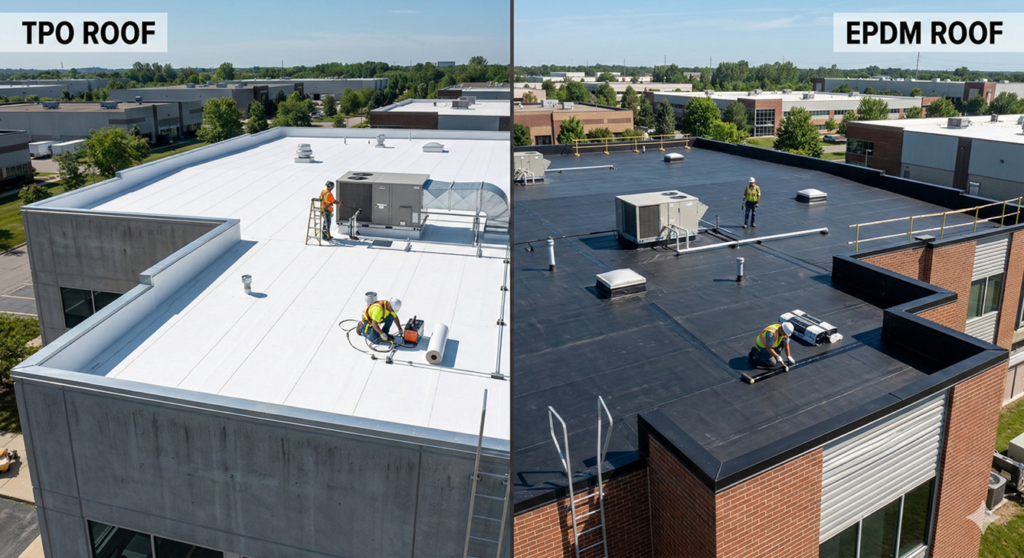
With offices in Newark and Middletown, DE, Paddy´s Roofing has spent over 20 years helping commercial property owners and managers throughout Delaware, Northeastern Maryland and Southeastern Pennsylvania make smart roofing decisions that protect their buildings and investments. In this article, we’re breaking down two of the most popular commercial roofing systems, TPO and EPDM, so you can confidently choose the right solution for your specific property.
Whether you’re planning a new roof or considering a replacement, understanding the differences between TPO (Thermoplastic Olefin) and EPDM (Ethylene Propylene Diene Monomer) will help you make the best choice based on performance, cost, and long–term value.
What is TPO Roofing?
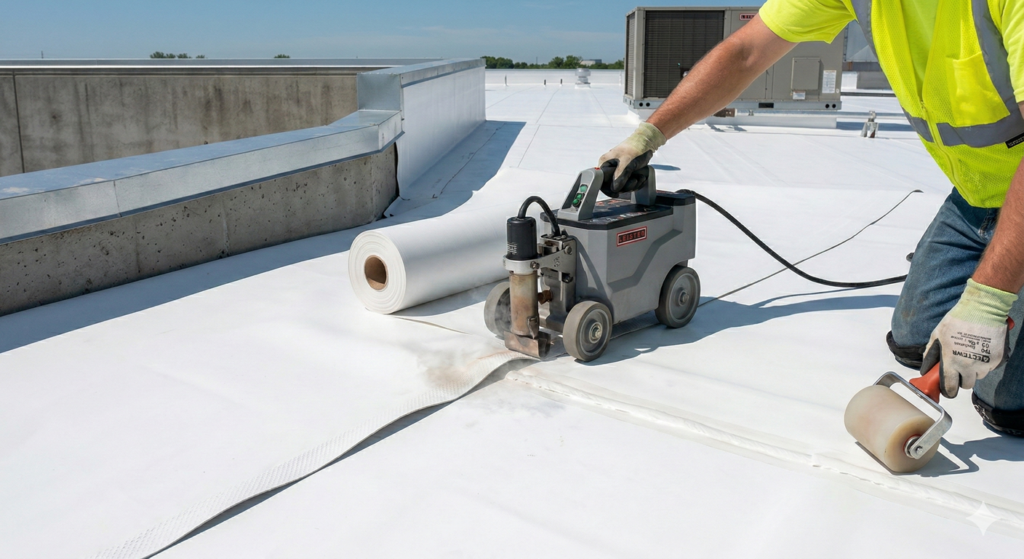
TPO (thermoplastic polyolefin) roofing is a popular, cost-effective, single-ply membrane used primarily for flat or low-slope commercial roofs. It is composed of polypropylene and ethylene-propylene rubber, creating a durable, flexible, and reflective white surface that resists UV rays, punctures, and algae growth.
What is EPDM Roofing?
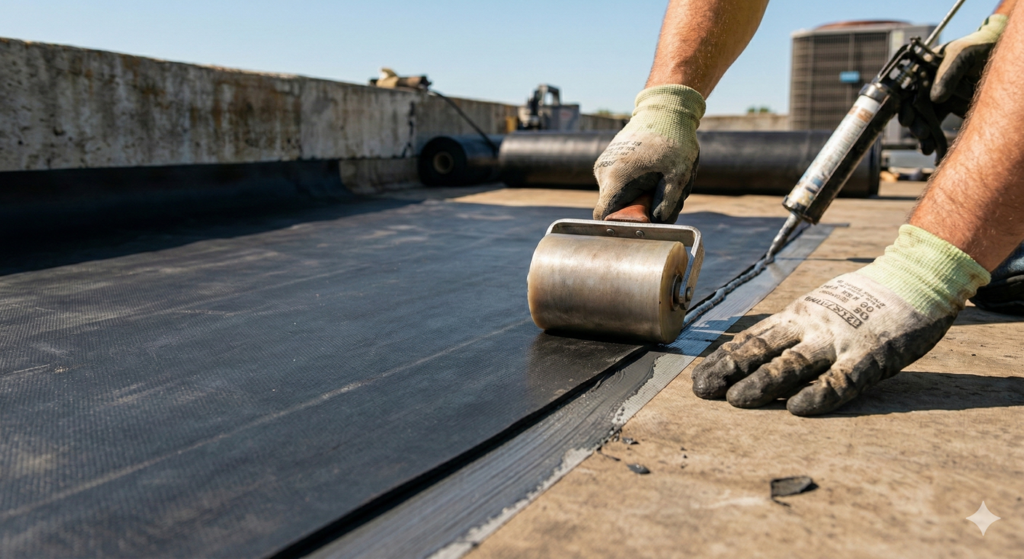
EPDM (ethylene propylene diene monomer) roofing is a durable, synthetic rubber membrane designed for flat or low-slope roofs on commercial and residential buildings. Known for its flexibility, 100% waterproofing, and high resistance to UV rays, hail, and extreme temperatures.
Although both TPO and EPDM provide excellent protection, they differ in performance characteristics, and the right choice depends on your specific needs, building type, and local climate.
TPO Roofing: Pros, Cons, and Best Uses
Key Benefits of TPO
◾ Energy Efficiency
TPO membranes are typically white or light–colored, making them highly reflective. This reduces heat absorption, which can lower cooling costs, especially valuable for large commercial buildings in warm climates.
◾ Seam Strength & Leak Resistance
TPO’s heat–welded seams form a strong bond that resists leaks under normal conditions.
◾ Flexibility in Hot Weather
TPO stays flexible in higher temperatures, reducing the risk of cracking.
◾ Cost–Effective
TPO is often less expensive than other single–ply systems, offering a strong performance–to–price ratio.
Limitations of TPO
◾ Durability Varies by Manufacturer
Quality can differ significantly between brands, so proper installation and material selection are essential.
◾ Susceptible in Very Cold Weather
In extreme cold, some types of TPO can become brittle without proper insulation.
Best Uses for TPO
✔ Flat or low–slope commercial roofs
✔ Buildings where energy efficiency is a priority
✔ Warm or moderate climates (although suitable for year–round use with proper installation and insulation)
EPDM Roofing: Pros, Cons, and Best Uses
Key Benefits of EPDM
◾ Excellent Durability & Weather Resistance
EPDM is highly resistant to UV damage, extreme temperatures, and ozone exposure, which contributes to its long lifespan.
◾ Excellent in Cold Weather
EPDM remains flexible and resilient even in harsh, cold climates, which is helpful in seasonal environments like Delaware.
◾ Puncture Resistance
EPDM tends to withstand punctures well, making it a great choice for roofs with heavy rooftop equipment and foot traffic.
◾ Long Track Record
EPDM’s performance history is extensively documented throughout its decades of use.
Limitations of EPDM
◾ Dark Color Absorbs Heat
Standard EPDM is often black, which means it absorbs heat and may raise cooling costs unless paired with a reflective coating.
◾ Seams Can Be Vulnerable
EPDM typically uses adhesive seams rather than heat–welded ones. If seams are not properly installed, the risk of leaks increases.
◾ Aesthetics & Less Energy Reflectivity
Aesthetics may be less important on commercial roofs, but EPDM doesn’t reflect heat as well as white TPO.
Best Uses for EPDM
✔ Flat or low–slope commercial roofs
✔ Cold–climate regions or variable weather
✔ Roofs with heavy equipment or foot traffic
Pricing Considerations
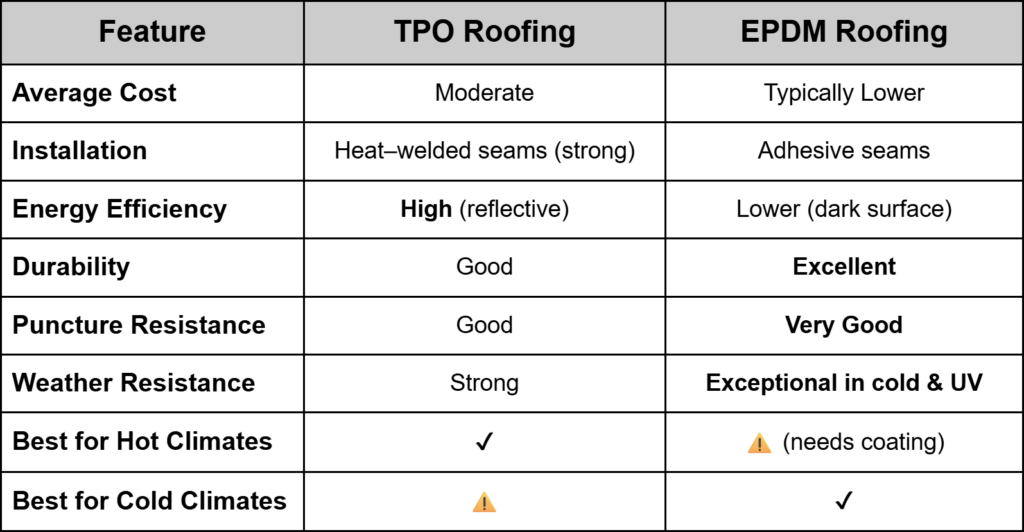
TPO and EPDM roofing costs vary based on factors like roof size, slope, insulation, accessories, and local labor rates. Generally, EPDM tends to be less expensive upfront than TPO, though TPO may lead to long-term savings due to lower cooling costs resulting from its reflectivity. Ultimately, the lifespan of either type of roofing is influenced more by choosing higher-quality membranes and ensuring expert installation than by the membrane type alone. Our team at Paddy’s always provides transparent pricing with options tailored to your budget and performance priorities.
Which Roof Should You Choose?
Here’s a simple guide based on building type and needs:
Choose TPO if:
✔ You want excellent energy efficiency and lower cooling costs
✔ Your building is in a warmer climate
✔ You’re looking for strong seam performance
Choose EPDM if:
✔ You want maximum durability and weather resistance
✔ Your area has varied or colder weather
✔ Puncture resistance and longevity are priorities
Ready for a Roofing Upgrade?
Get a Professional Roof Estimate at No Cost
Work with Paddy’s, Your Commercial Roofing Experts
Paddy’s Roofing is your trusted partner for commercial property protection. We begin with thorough, professional inspections using the latest technology to accurately assess your roof’s condition and diagnose issues. We then provide honest, transparent recommendations without high-pressure sales tactics.
We specialize in installing high-quality TPO and EPDM roofing systems. Our certified and experienced professional roofers ensure exceptional workmanship, delivering a watertight, durable, and energy-efficient installation that adheres to the highest industry standards.
Don’t leave your roof to chance. Contact Paddy’s for a detailed estimate on commercial roofing in Newark and get a high-performance system built to stand the test of time

Patrick F.
Patrick F. is the owner of Paddy’s Roofing, Siding, and Chimneys and a roofing professional with more than 30 years of industry experience. He has owned and operated Paddy’s since 2013 and has been a GAF Master Elite® contractor for several years. Patrick brings extensive hands-on roofing knowledge and a commitment to honest, quality workmanship to every project.
More About Patrick F.